
When we think of what a horse needs, we tend to think of physical necessities, such as food and water. Beyond that, perhaps having their feet trimmed or their teeth floated.
I realized that in most cases we are actually thinking of what we want, for example: “My horse needs training.” or, “My horse needs to learn respect.” It shouldn’t shock us to learn that our horse doesn’t need either of those things – those are things we want and the horse can live a happy life without them – or without us – for that matter.
When we contemplate what our horse needs, we must dissociate that from what we want. That can be tough, however the two connect very closely. Meeting our horse’s needs is a precursor to ultimately achieving what we desire, and at the very least, laying down the paving stones to get there.
As an example, I recently taught a lesson with a horse that initially was pushy and crowding his owner. I will strongly emphasize here that what the horse needs is not to learn to respect us. That is an unfortunate myth, but one many have been taught. We know that true and honest respect is earned, not learned. A horse cannot respect a person that does not know how to lead. And leadership isn’t taught in general horse circles, so we have an industry wide problem here.
I will strongly emphasize here that what the horse needs is not to learn to respect us. That is an unfortunate myth, but one many have been taught.
Here’s the psychology behind it. In the horse’s reality, the herd and its structure define the horse’s social order. When and where they can eat. Who leads who. Who decides what is safe and when to run. These are exceptionally important items in their life – so when our horse is unclear about the herd order, and particularly the leader, they experience varying degrees of stress. They react to that stress in ways from dissociation to annoyance to aggressiveness. Some may appear defensive or defiant. Some are overly fussy, playful, or unable to stand still.
To put it bluntly, what our horse needs is a leader. One that can communicate in horse, not human. And they may not believe they have one. Or they might clearly think they are above their owner in social standing. To work through this, we must make a big shift in our thinking and behaviour. Making changes in our paradigms, the way we think and act is not easy.
Sometimes we end up coming to the realization that what we’ve been doing for years is actually detrimental and is the root of the problem.
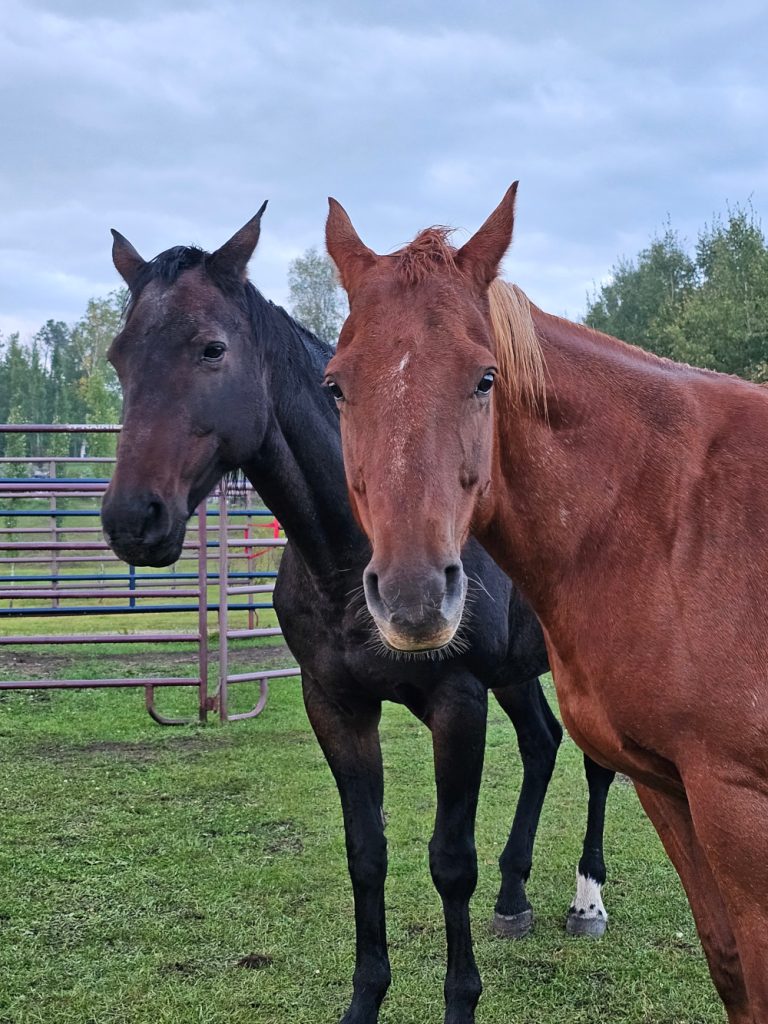
Change is sometimes a big pill to swallow. But we cannot grow without change.
Here’s the truth: the horse doesn’t need to change. We do.
When we learn how to lead with the clarity that the horse requires, in a positive, understanding way, our problems can disappear within a couple of minutes. A spacial conversation with a horse doesn’t take long, and it typically lasts forever. Imagine taking 30 seconds to permanently fix what has been troubling you and your horse for years. When we take the time to understand their psychology, things make so much sense.
In the case of the horse we were working with recently, many problems that the horse and handler were having disappeared the moment they had a leadership conversation. This does not involve archaic notions of discipline, obedience, punishment or making the wrong thing hard. Instead, in a supportive way, we demonstrate we own the space and can move our horse with it. How we do that must be in the way a horse naturally understands it.
A spatial leadership conversations is one of the first exercises in our horsemanship workshops. It has to be the first, because we want to hit the trails with confident horses that are willing and proud to follow us, right?
In the case of the horse in question, after this conversation, he was no longer upset when another horse left the arena. He quit kicking out when transitioning. He walked quietly with his owner. Meeting his basic instinctual need of clarity in the herd met our desires for a calm, focused horse.
Clarity in the herd is one need a horse has. Can you think of others? Here are some off the top of my head. See if you can relate to some of these as a human being.
- Being spoken to in a language the horse natively understands.
- Freedom from fear and eliminating anxiety.
- Creating positive associations and removing negative ones.
- Acceptance in the herd (in this case with you) as a valued herd member.
- Praise
- Acknowledgement of their thoughts, opinions or ideas even if they differ from our own.
- A known association that a try is a success.
- Clear feedback on those tries.
- Faith in us as a leader: their conviction that following us always leads to success even though sometimes it might be challenging.
- Security and comfort in interactions with us, for example: play, grooming / and liberty. Those are all things they do naturally with each other.
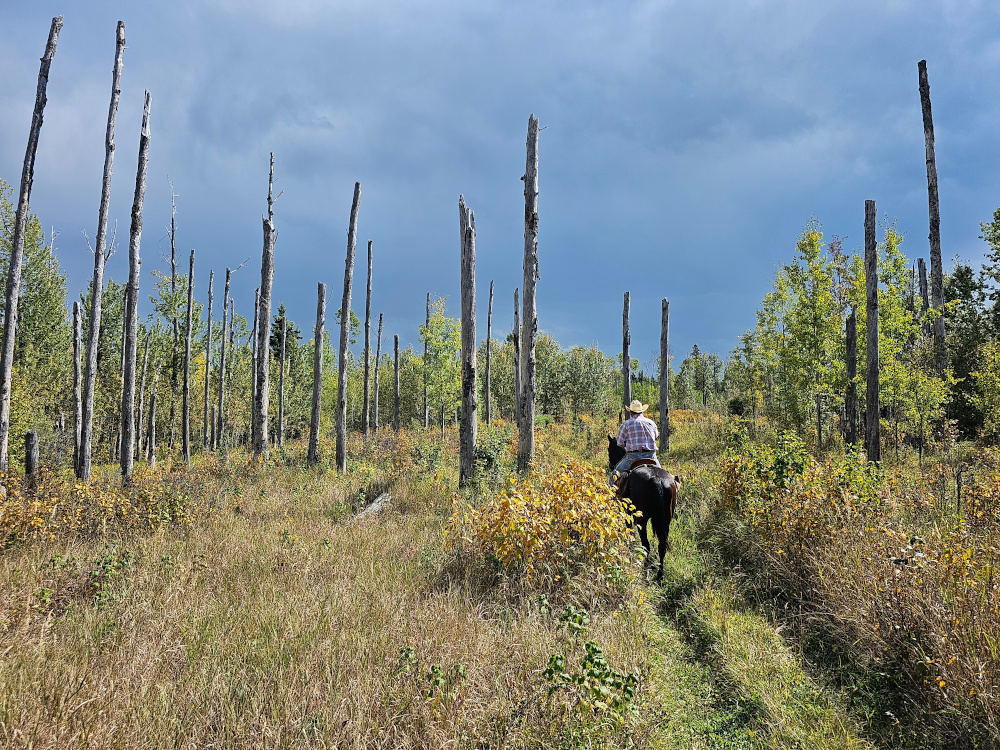
When we strip away our wants and listen to what our horse truly needs, we discover a profound truth: the horse doesn’t need to change – we do. Their world is built on clarity, safety, and belonging. When we step into the role of a leader who communicates in their language, we meet those needs and unlock the partnership we’ve always dreamed of.
Respect, trust, and harmony aren’t taught through drills or demanded through force. They are earned when we provide security, acknowledge their tries, and prove – to them and to ourselves – that following us always leads to success. In that moment, the horse is no longer anxious, defiant, or confused. They are confident, willing, and proud to walk beside us.
Ultimately, horsemanship is not about bending the horse to our will, but about reshaping ourselves to meet them where they are. And when we do, the transformation is obvious, immediate and lasting.
Ultimately, the profound realization is that the horse’s needs and our own are inseparable; when we give them clarity, safety, and freedom from fear, we receive in return the harmony and connection we crave.
Scott Phillips
December 2025
2 responses to “What your horse really needs.”
Excellent article, it has sparked my curiosity as to how we can further work with horses so they don’t crowd us, let us saddle and ride them etc. It reminded me of a book I read last year: Horse Brain, Human Brain. It described the effect of praise. I applied it to Kasba, my youngest horse, who was a bit fussy while I was trimming his feet. At the slightest move that facilitated me to trim his feet, I stopped and rewarded him by rubbing his body. It took me three times and he was an angel, and stood still for me all the time. There are still many other areas to work on. Looking forward to the workshop in January! Merry Christmas!
I thought this an excellent and positive article. Thank you.